

Rotator Cuff and Instability Treatment
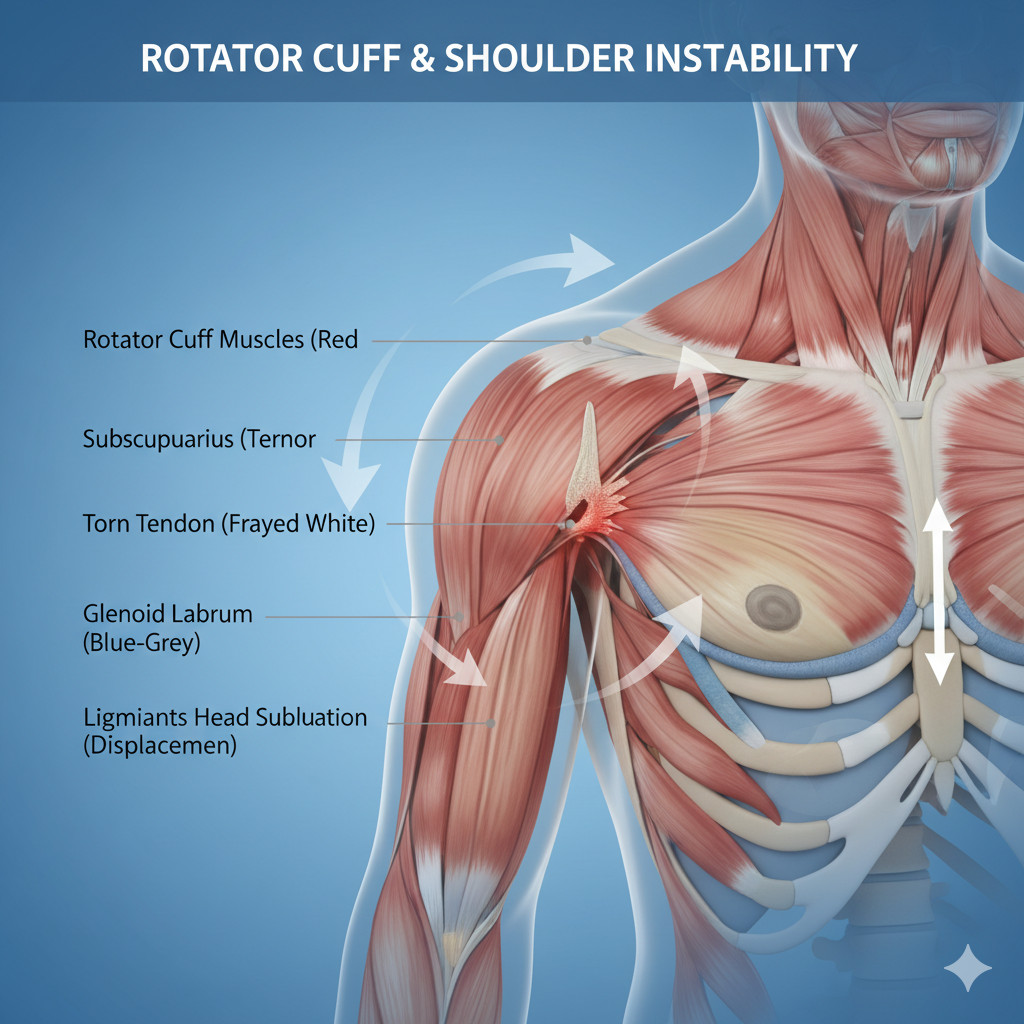 Rotator cuff injuries and shoulder instability commonly affect athletes and individuals performing repetitive overhead activities.
These conditions can cause weakness, pain, and recurrent dislocations if untreated.
Understanding the Shoulder Stabilizers
The shoulder depends on the rotator cuff muscles and surrounding soft tissues for stability and controlled movement.
Damage to these structures causes pain, weakness, and instability during daily or overhead activities.
Rotator Cuff Injury
The rotator cuff consists of four muscles and their tendons that lift and rotate the arm while keeping the humeral head centered in the socket.
Injury may occur due to trauma, repetitive strain, degeneration, or chronic impingement.
Patients often experience pain, difficulty lifting the arm, night discomfort, and weakness during reaching movements.
Shoulder Instability
Shoulder instability occurs when the labrum, capsule, or ligaments stretch or tear.
Traumatic dislocation, sports activity, or ligament laxity may cause this condition.
Patients commonly feel the shoulder slipping, clicking, or repeatedly dislocating in certain arm positions.
Clinical Evaluation
A comprehensive examination and imaging studies identify tendon tears, labral injury, and capsular laxity.
Early diagnosis helps prevent progression of instability and secondary damage.
Non-Surgical Treatment
Initial treatment usually includes activity modification, anti-inflammatory measures, and structured physiotherapy.
Strengthening the rotator cuff and scapular stabilizers improves joint control and reduces symptoms.
Many patients recover with guided rehabilitation and gradual return to activity.
Surgical Treatment
Surgery is considered for complete tears, recurrent dislocations, or significant labral injury.
Arthroscopic techniques repair torn tendons, reattach the labrum, and tighten ligaments while preserving surrounding tissues.
Postoperative Rehabilitation
Rehabilitation protects repaired tissues in early stages and gradually restores mobility and strength.
Following the rehabilitation timeline ensures proper tendon healing and stable shoulder function.
Expected Outcome
Timely diagnosis and individualized treatment improve stability, reduce pain, and restore functional movement.
Addressing both tendon integrity and joint stability prevents recurrence and supports long-term shoulder health.
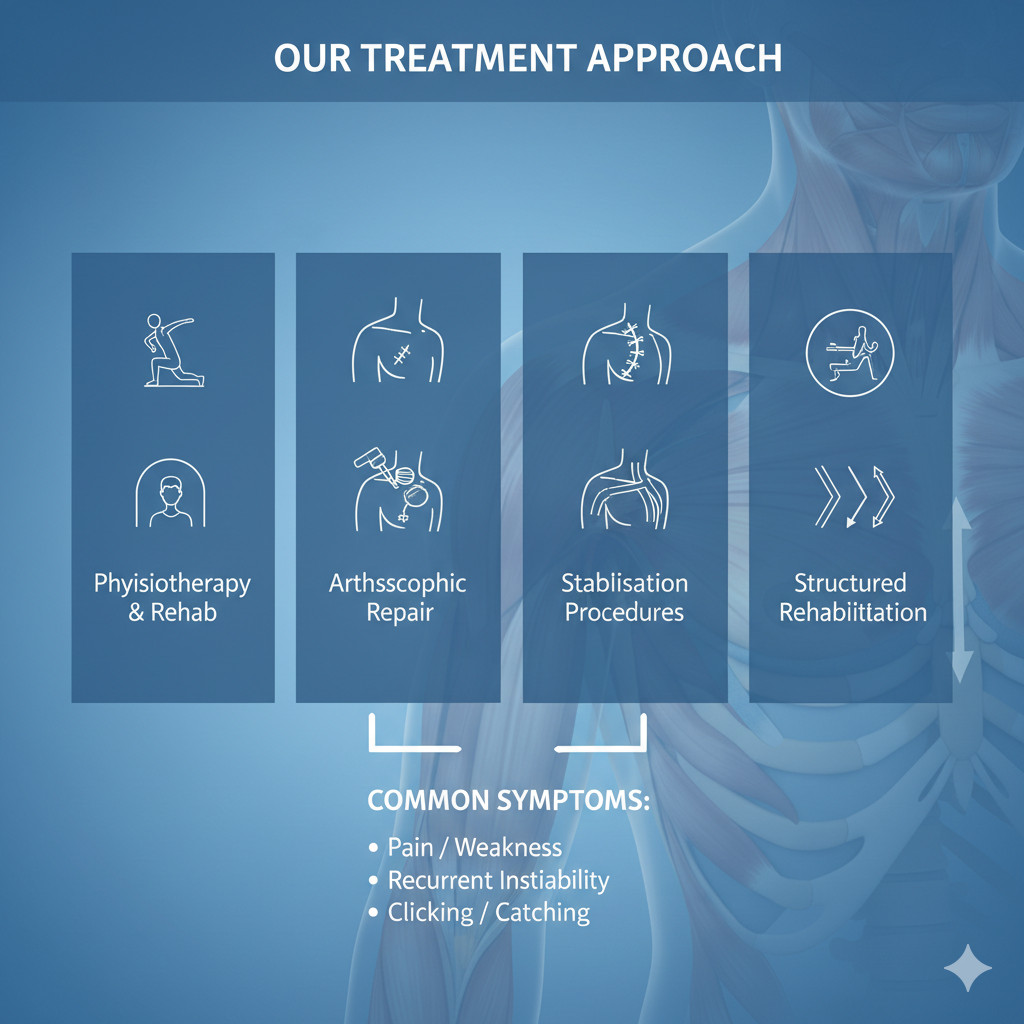
Common Symptoms:
- Pain during lifting or throwing
- Weakness in the shoulder
- Recurrent dislocation or subluxation
- Clicking or catching sensation
- Limited strength and endurance
Our Approach:
A detailed clinical assessment and imaging determine injury severity and guide treatment selection.
- Physiotherapy for mild cases
- Arthroscopic rotator cuff repair
- Stabilisation procedures for instability
- Structured rehabilitation program
Goal:
Restore shoulder strength, improve stability, and enable safe return to daily activities and sports.
Follow us on Facebook
